The transformation of paintings
Dust, grime, stains, and nicotine deposits that accumulate on the surface of a painting over time can only be safely removed using carefully selected conservation-grade cleaning systems. Prior to treatment, solvent tests are carried out to determine the most effective and least invasive method for each individual artwork.
When a painting is covered by decades of surface dirt, its fine details may become obscured, and once vibrant landscapes or still life compositions can appear dull, darkened, or visually blurred. Professional surface cleaning can therefore have a significant impact on the overall appearance of the artwork, revealing hidden details, restoring clarity, and reviving the original tonal balance and colour intensity.
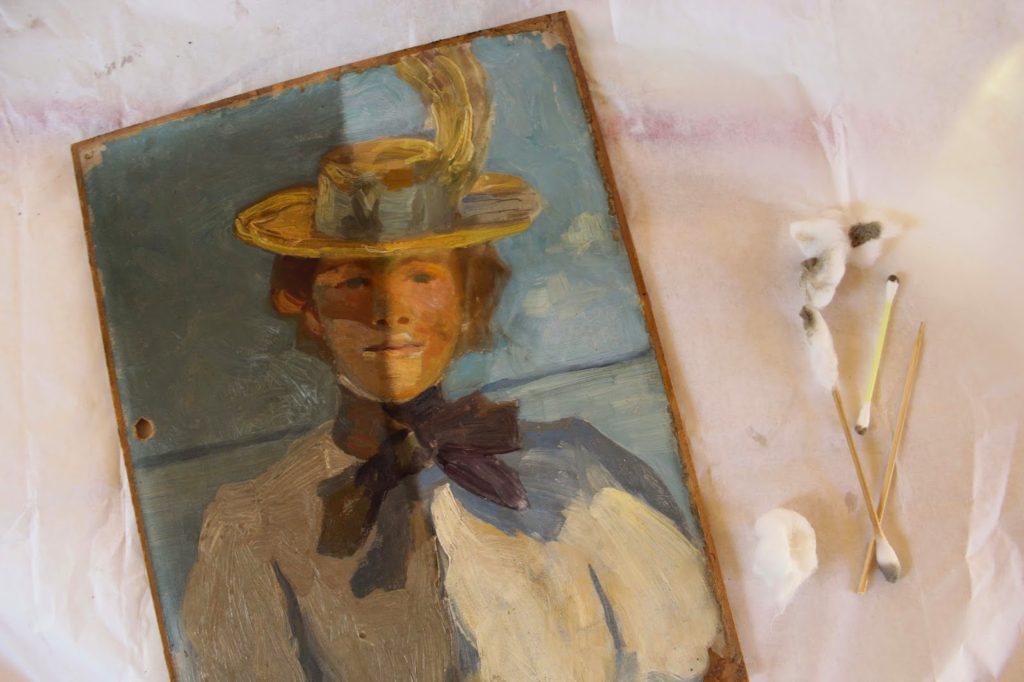
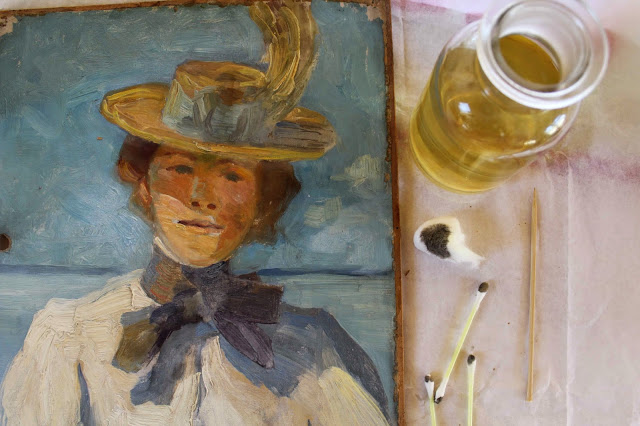
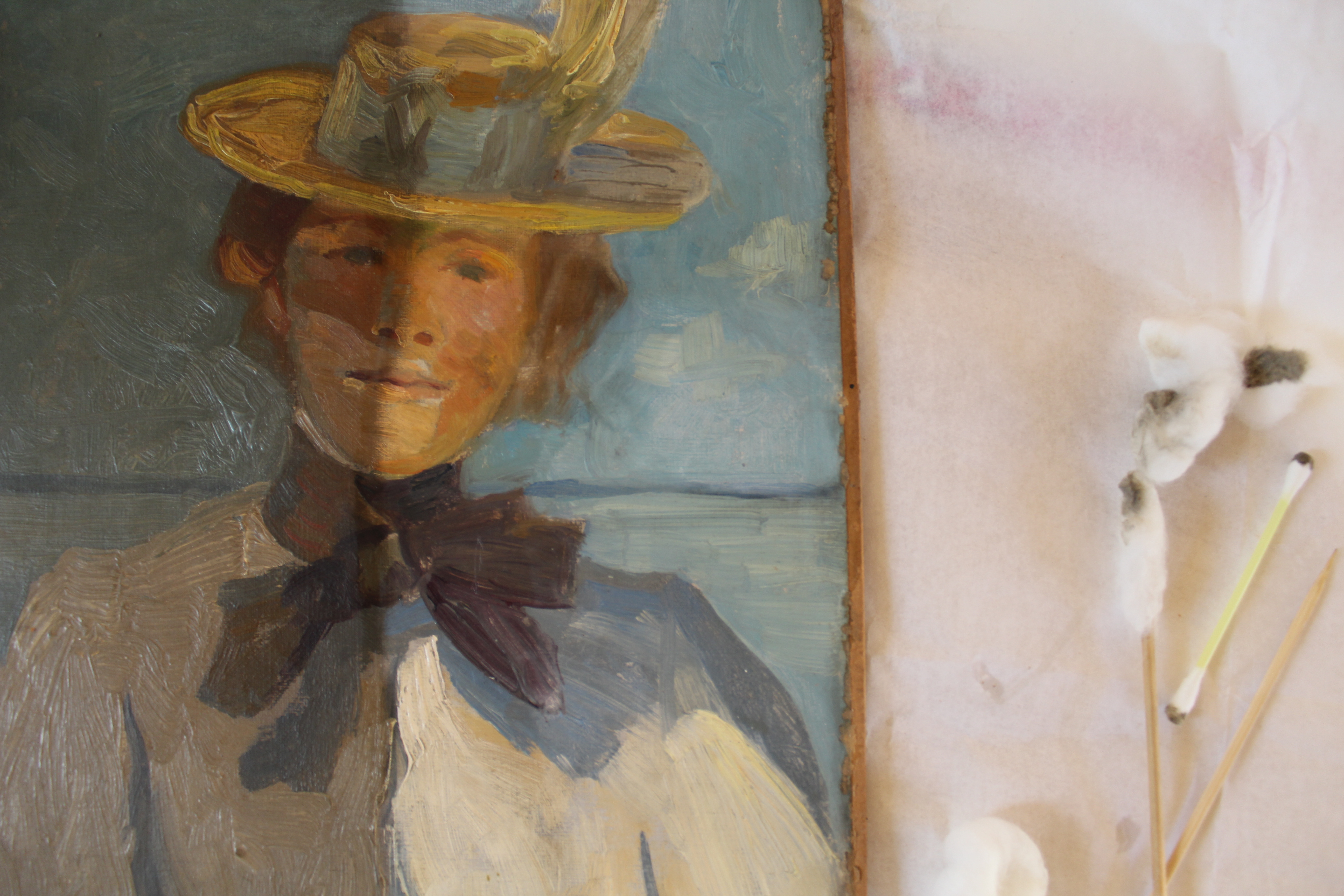
Cleaning phases of The Lady in a Summer hat
The surface shows a heavy dark deposit, likely soot and grime accumulation, possibly from exposure to fireplace smoke.
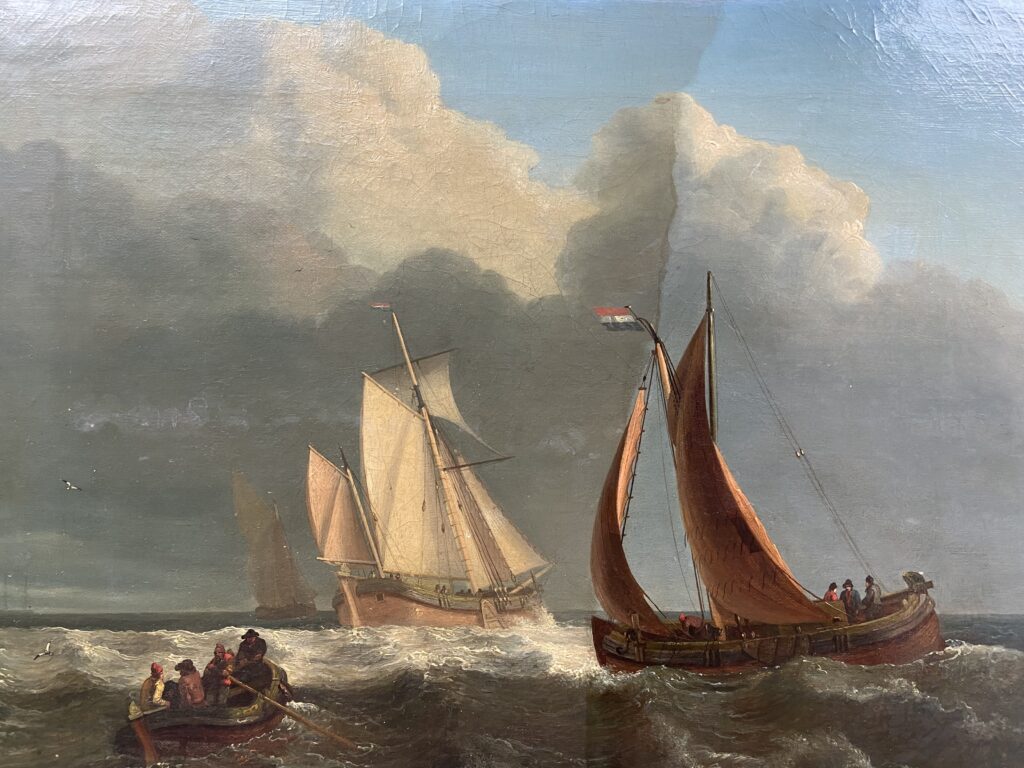
Partially cleaned maritime painting
In landscape paintings, accumulated surface dirt and discoloured varnish can significantly affect the perception of depth and spatial perspective.
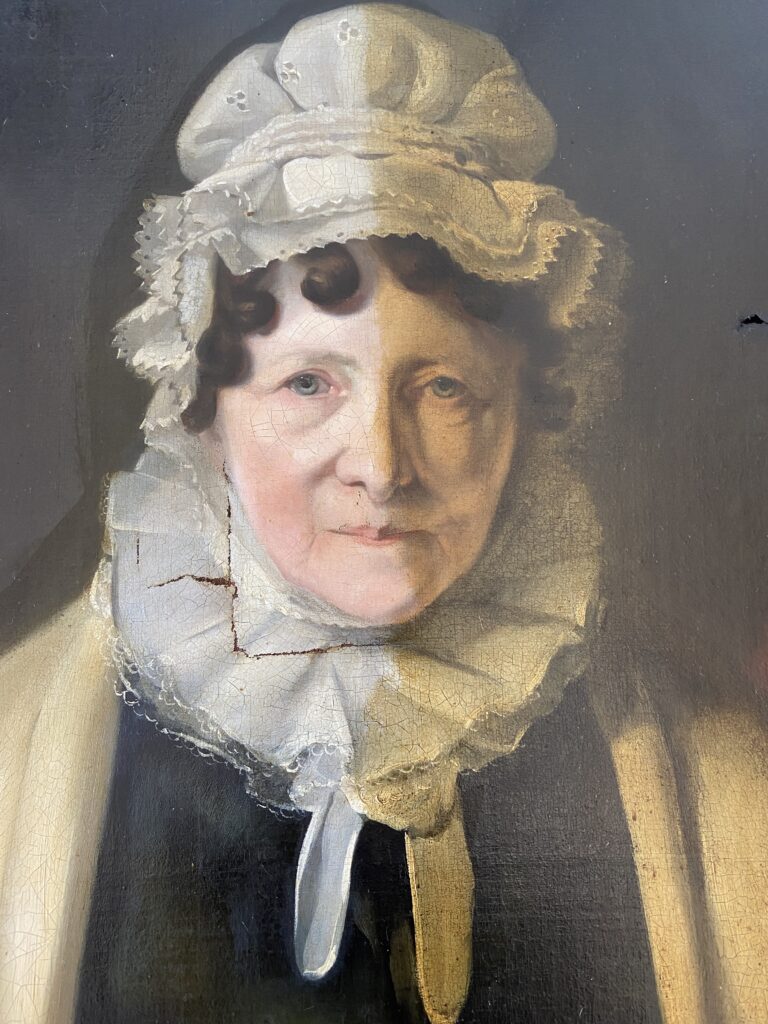
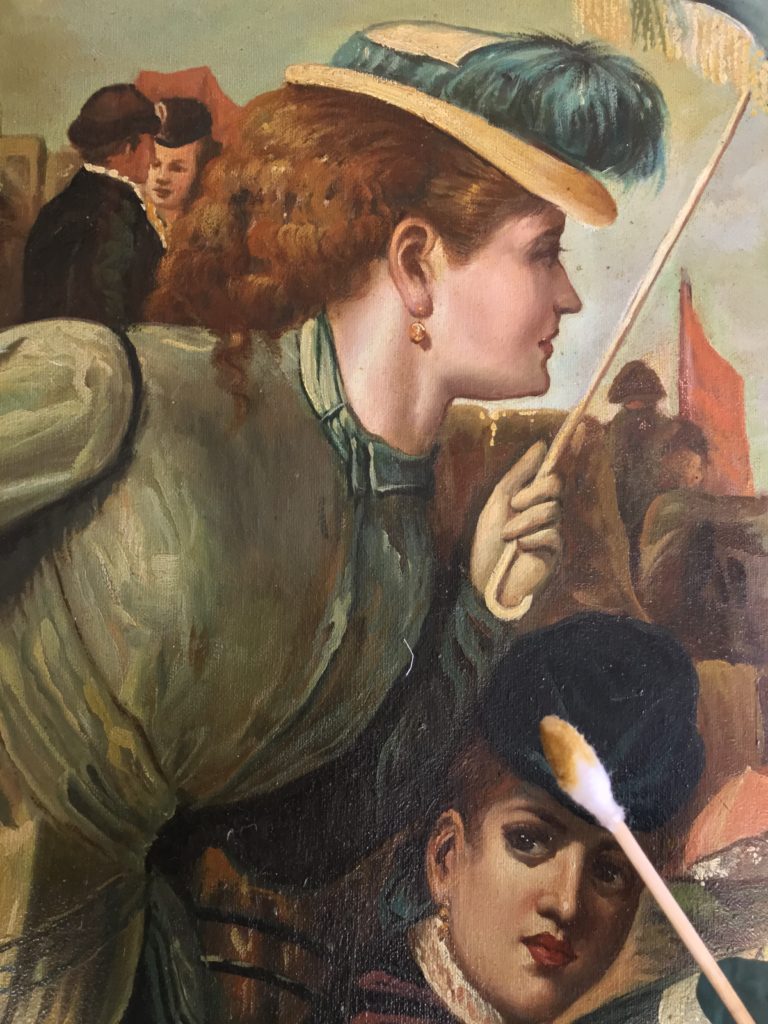
Careful cleaning of a portrait can reveal subtle tonal nuances and refined details that have been softened or obscured by age-related surface deposits. As these layers are gently reduced, the sitter’s expression, modelling, and presence become more clearly defined, allowing the artist’s original intent and emotional depth to be appreciated once again.
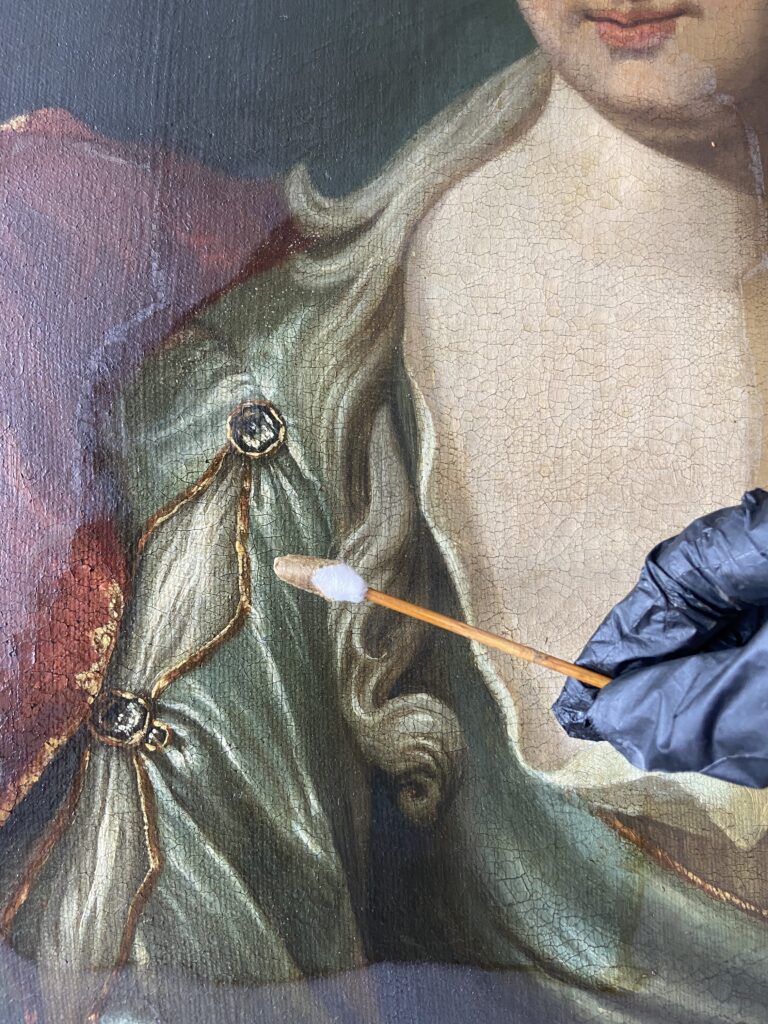
During cleaning treatment on Countess Bineau by Dahlin 1784