Professional cleaning begins with a careful examination of the painting’s surface and canvas, followed by testing and thorough assessment.
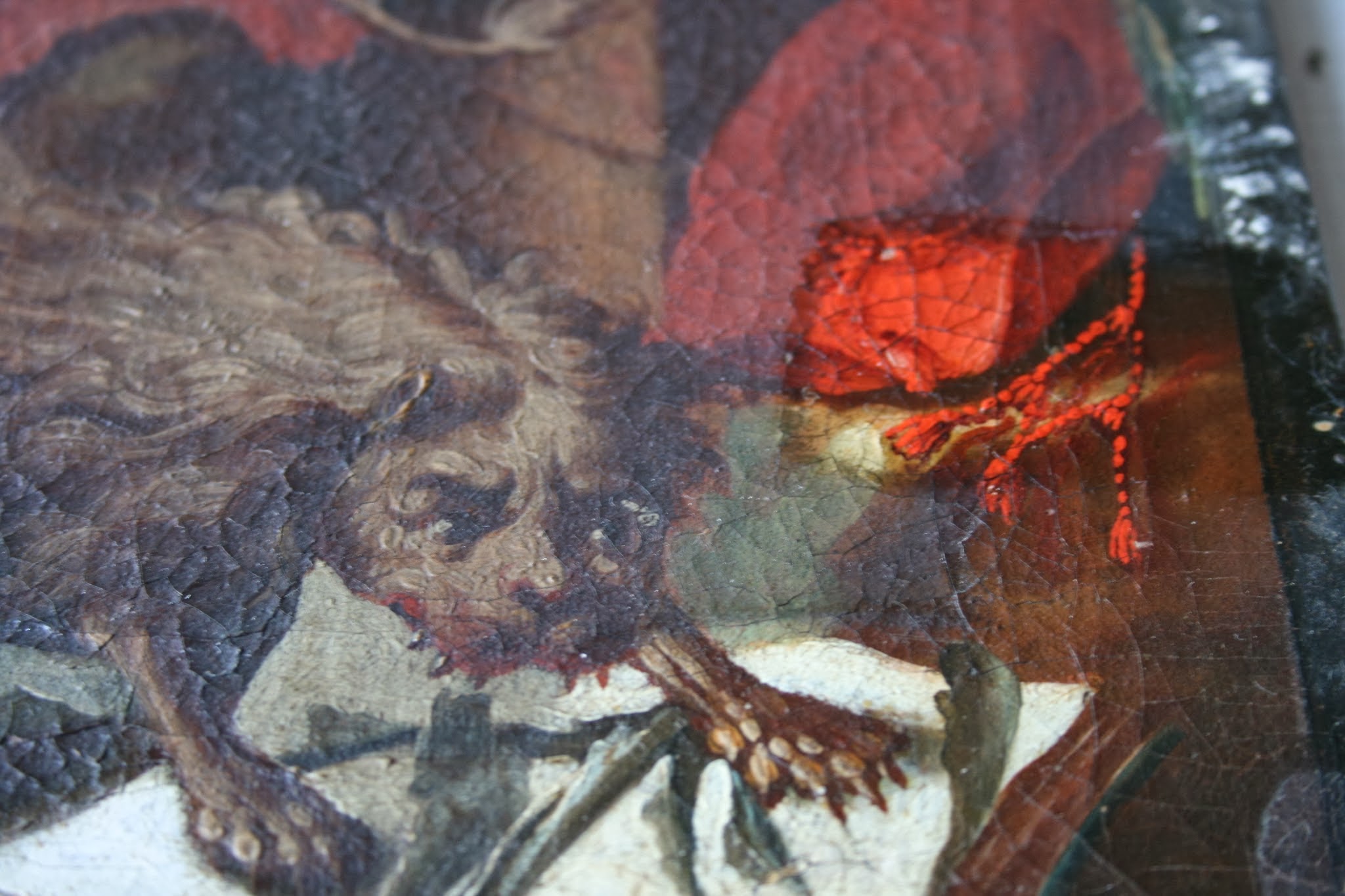
Over decades, dust, nicotine, and airborne particles can accumulate within the fibres of the canvas, forming a greasy, discoloured surface layer that obscures the original appearance of the painting.
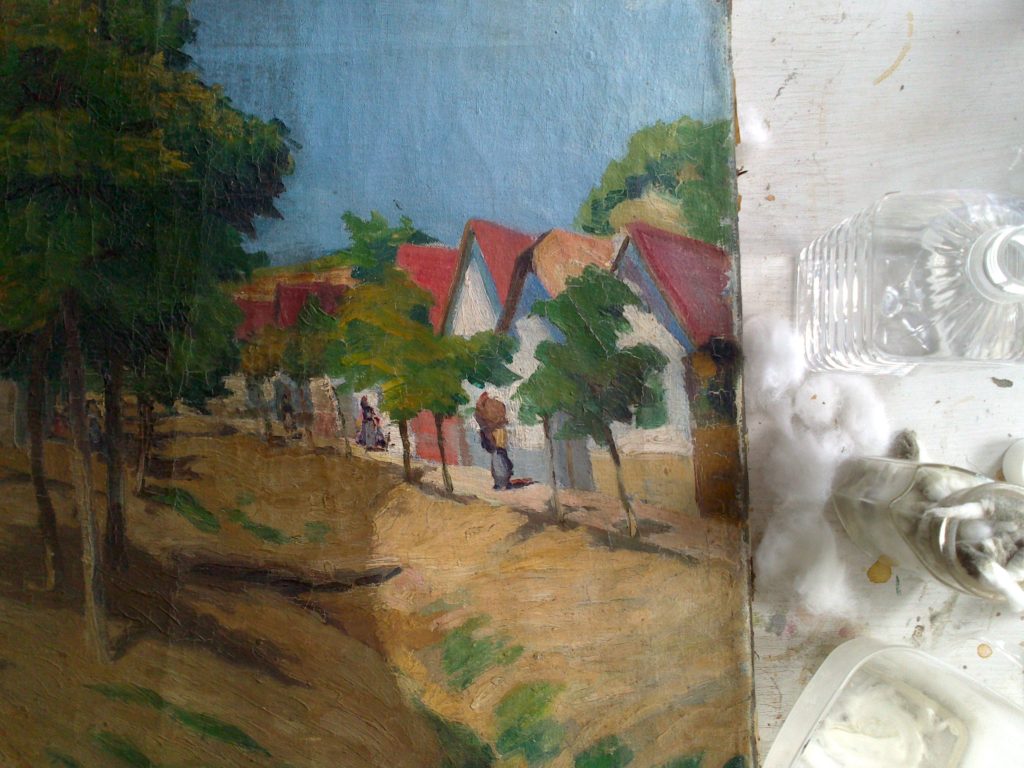
Cleaning an old painting may seem simple, but the surface of a painting is far more complex and delicate than it appears. Household cleaning products are not designed for works of art, they can interact with the paint layer, varnish and other materials in ways that are difficult to predict.
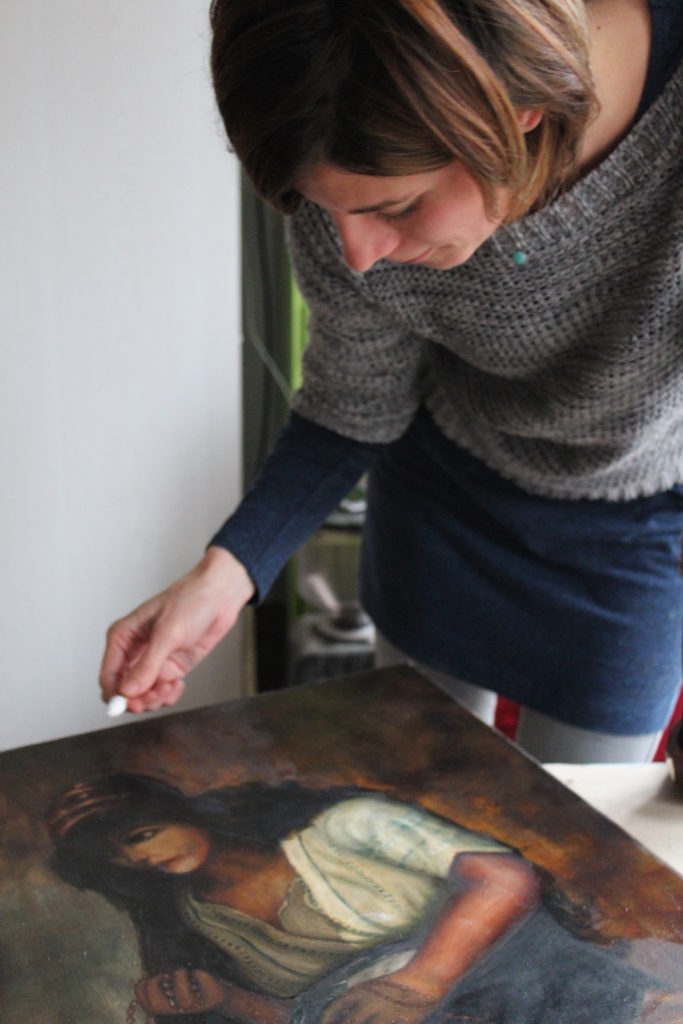
Before beginning treatment on a painting careful cleaning tests are carried out on the paint surface to assess its response to the selected solvents and ensure safe and controlled conservation.
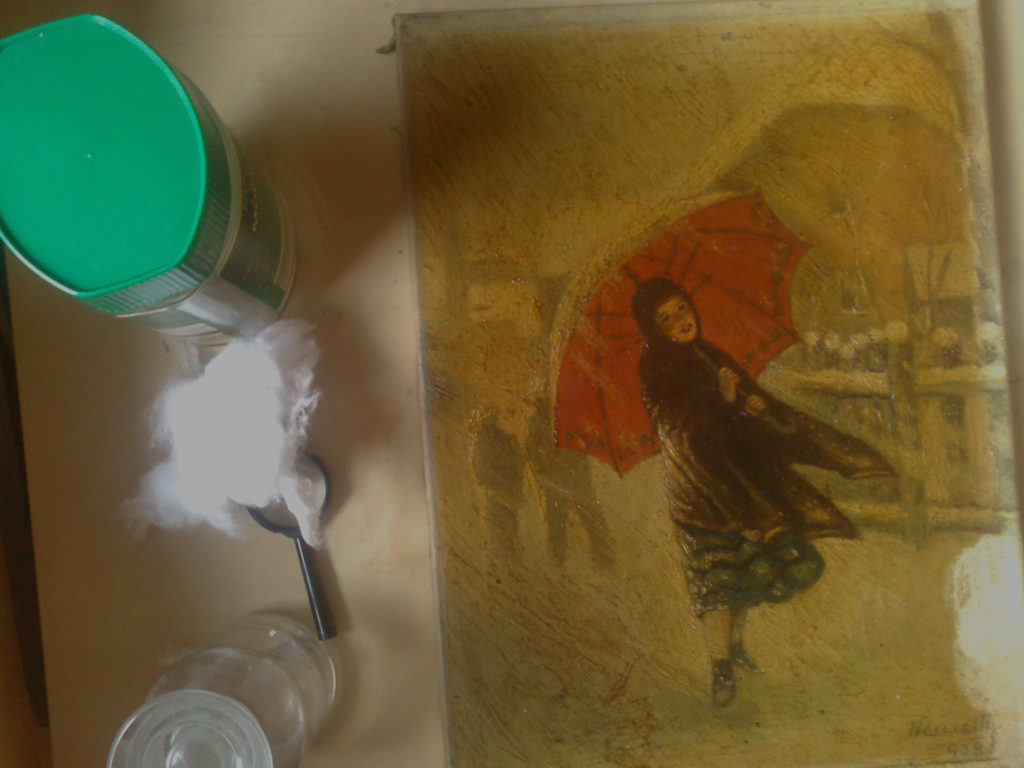
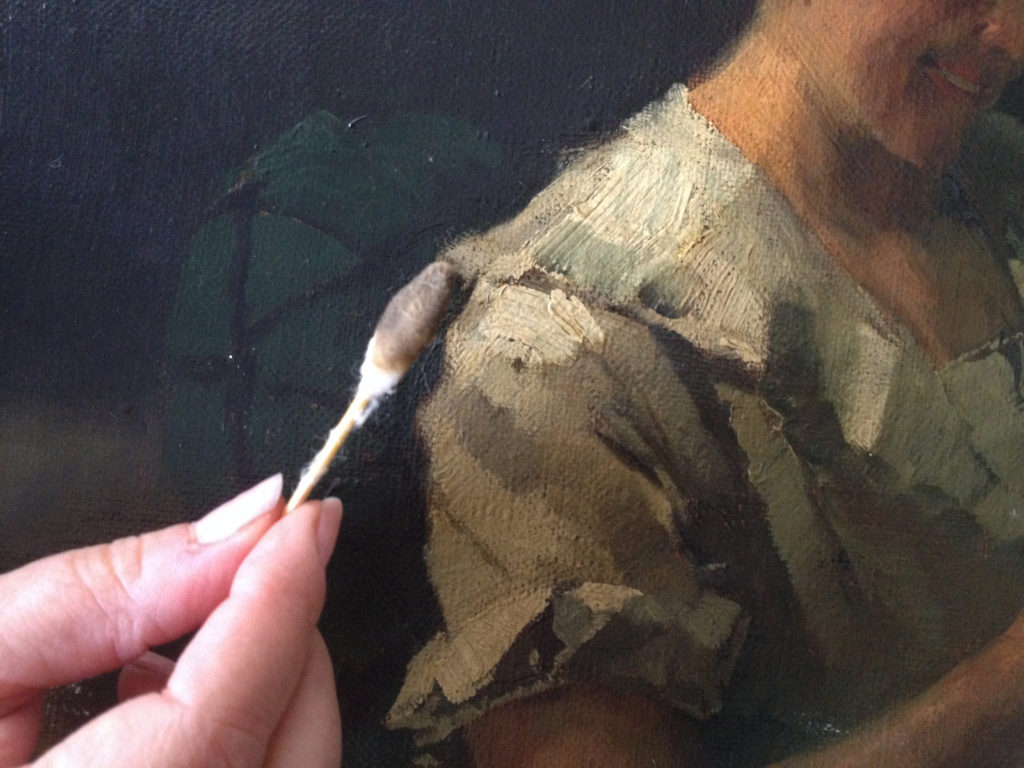
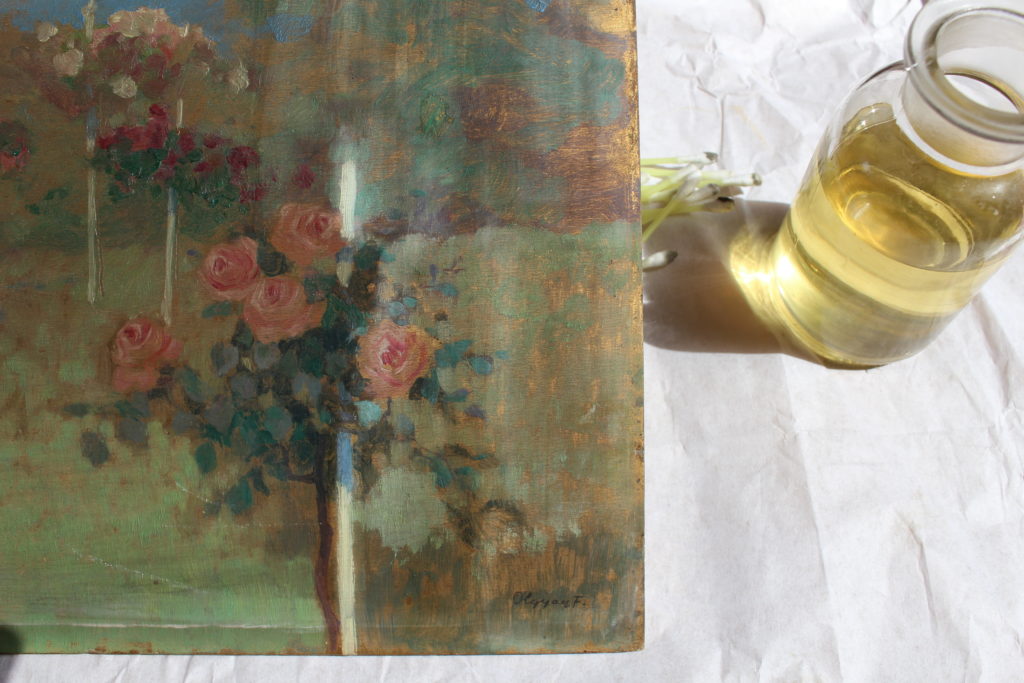
Removing old varnish is meticulous and delicate work, as paint and varnish are often difficult to separate and require materials of varying strength. The process becomes even more complex when the paint layer is delicate.